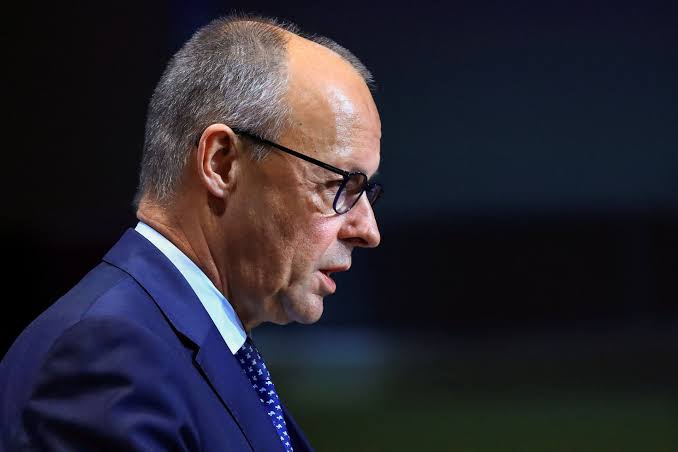
The interview that became a political controversy
On August 30, 2026, German Chancellor Friedrich Merz appeared on ARD's traditional summer interview, speaking with journalist Markus Preiß.
The discussion came at a difficult moment for his government.
Germany was facing economic uncertainty, public dissatisfaction and growing political pressure. Many citizens were questioning whether the government's promised reforms were delivering meaningful improvements.
Merz entered the interview determined to defend his administration's record and explain why difficult economic decisions were necessary.
But the conversation soon attracted attention for a different reason.
Following the broadcast, journalists examining the chancellor's statements identified several claims they considered misleading or insufficiently supported.
What was meant to demonstrate political confidence instead intensified questions about the accuracy of government messaging.
The migration statement that raised questions
One of the most disputed moments involved Germany's migration figures.
Merz suggested that his government had reduced migration numbers by more than 60% within just over a year.
The statement appeared to highlight a major achievement for the administration.
However, fact-checkers from ARD and Deutsche Welle examined the available official statistics and reached a different conclusion.
According to Germany's Federal Office for Migration and Refugees, first-time asylum applications decreased by 35.4% during the first half of 2026 compared with the same period in 2025.
Other comparisons also showed substantial declines, but they did not support the broad claim presented by the chancellor.
The journalists additionally noted that asylum applications had already been declining before Merz entered office.
The findings raised an important question: Was the government presenting complex economic and social statistics in a way that made its achievements appear greater than they actually were?
A surprising contradiction over working culture
Another controversial part of the interview involved Germany's workforce.
Merz has repeatedly argued that Germany must increase productivity and strengthen its work ethic to remain economically competitive.
His statements about working hours and part-time employment have attracted criticism from people concerned about work-life balance and social expectations.
During the interview's audience-question segment, Merz denied having personally used the words associated with laziness and lifestyle in the disputed context.
But journalists found earlier statements that contradicted that denial.
In February 2025, Merz had referred to laziness while discussing the importance of performance and responsibility.
In February 2026, he had also used the term lifestyle when discussing working patterns and the four-day week.
These findings did not resolve the broader debate about German productivity.
They did, however, create another credibility problem for the chancellor.
Energy prices and another disputed explanation
Energy policy also became a central subject of the interview.
Germany's electricity costs and the closure of its remaining nuclear power plants have long been politically sensitive issues.
Merz argued that the country had shut down nuclear facilities before developing sufficient alternatives.
But fact-checkers pointed to research suggesting a more complicated picture.
Renewable electricity generation had expanded, and wholesale electricity prices had fallen after the nuclear phase-out, although researchers have also estimated that keeping nuclear plants operating could have reduced prices somewhat further.
The disagreement illustrated how easily complicated economic developments can become simplified political arguments.
For German households and businesses, however, the debate remains highly practical.
Affordable energy is essential for industrial competitiveness, investment and financial stability.
Why the interview matters beyond one television appearance
The controversy is not simply about individual figures or disputed words.
It reflects a larger political challenge facing the German government.
Merz has promised economic renewal, stronger international competitiveness and significant structural reforms.
Supporters argue that Germany requires difficult decisions to overcome years of economic stagnation and political hesitation.
Critics question whether the government's approach sufficiently addresses the financial pressures facing ordinary households.
The interview brought these competing perspectives into focus.
Merz presented himself as a leader willing to make unpopular decisions, while the subsequent fact-checks highlighted the importance of explaining those decisions accurately.
A growing challenge for political credibility
In modern politics, television interviews are no longer isolated events.
Every statement can be examined, compared with previous speeches and circulated across digital platforms within minutes.
For political leaders, this creates both opportunities and risks.
A strong interview can reinforce public confidence, but inconsistencies can quickly generate questions that extend far beyond the original discussion.
The ARD interview demonstrated that even experienced political figures face intense scrutiny when discussing subjects as sensitive as migration, employment and the economy.
The key distinction is between political disagreement and factual accuracy.
Citizens can reasonably disagree about economic priorities, but public debate also depends on the reliability of the information used to defend those priorities.
What happens next for Friedrich Merz?
The chancellor's political future will depend on more than one controversial interview.
His administration still faces major challenges involving economic growth, public finances, migration policy and Germany's international position.
Successful reforms could strengthen his standing, while prolonged dissatisfaction could deepen pressure on his leadership.
The broader debate is therefore likely to continue.
Can Merz persuade voters that his government is making meaningful progress? And can he restore confidence among people who remain skeptical of his economic and political strategy?
The real controversy may not be what Friedrich Merz said during one interview, but whether Germans believe the government's promises still match the reality they experience every day.
As political pressure continues, that question could become one of the defining challenges of his chancellorship.